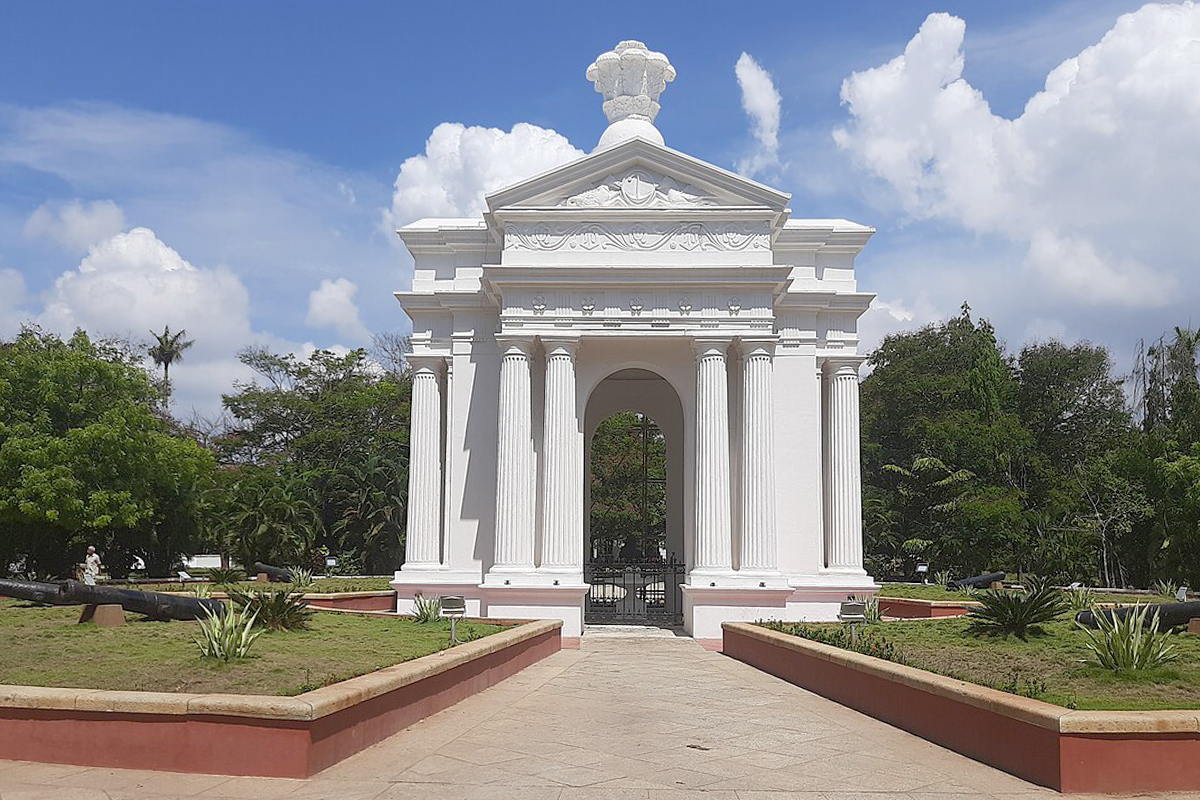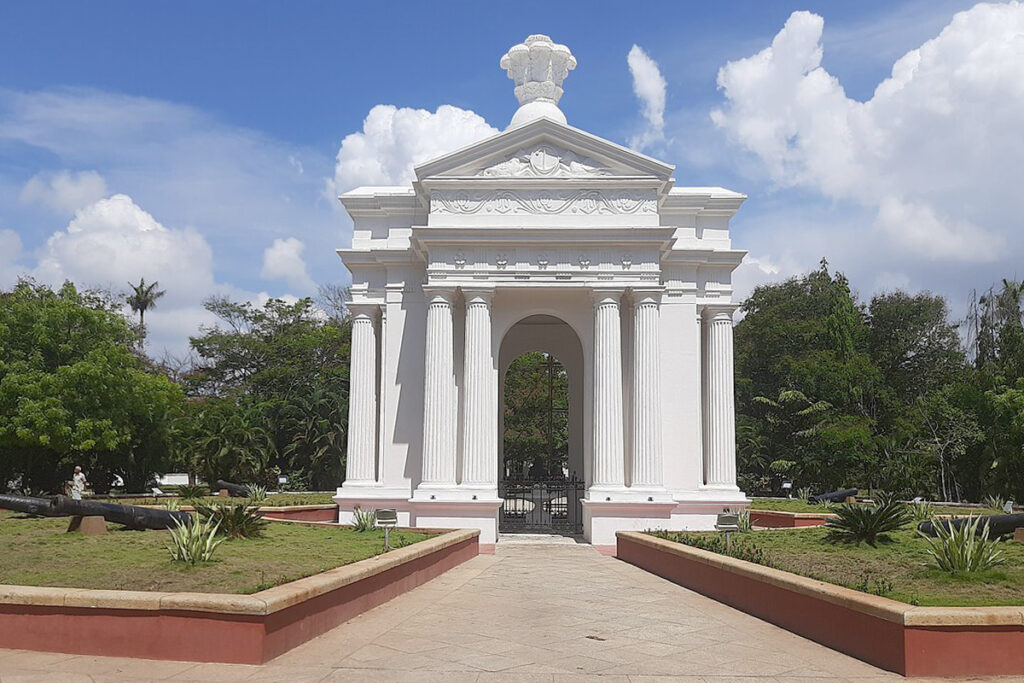
If you spend enough time walking the sun-drenched, mustard-yellow streets of the French Quarter, you inevitably end up seeking shade. And that search will almost always lead you to the lush, tree-heavy canopy of Bharathi Park. Right there, sitting squarely in the center of the greenery as a piece of ancient Rome dropped into South India, is a brilliant white structure.
To a casual tourist, it’s just a pretty backdrop for an Instagram photo. But the Aayi Mandapam Pondicherry locals cherish is so much more than stone and plaster. It holds arguably the greatest, most rebellious, and deeply moving piece of Pondicherry’s History.
This monument wasn’t built to stroke the ego of a victorious general. It wasn’t erected for a French governor or a wealthy European trader. To understand the true story of Aayi Mandapam Pondicherry, you have to know about Aayi—a local Tamil courtesan whose quiet act of defiance and extreme generosity gave this coastal town the one thing it desperately needed to survive: fresh water.
Let’s dive into the story. Because once you know it, you’ll never look at this white pavilion the same way again.
The Pride of a King and the House of Pleasure
To really get the weight of this story, we have to rewind the clock. Long before the French even knew this coastline existed, this region was a thriving port. In the 16th century, it fell under the massive shadow of the Vijayanagara Empire, ruled by the fiercely powerful King Krishnadevaraya.

Picture this: The King is making a grand royal visit. He’s traveling with all the pomp, guards, and noise you’d expect from an emperor. As his procession moves through the streets, a massive, stunningly illuminated building catches his eye. It is dripping in ornate carvings, glowing with oil lamps, and looks incredibly sacred.
Assuming he has stumbled upon a grand new temple, the great King steps down and bows his head in deep, respectful prayer.
You can imagine the sheer panic of the locals watching this happen. As the king finishes his prayer and stands up, a terrified local man edges forward. He has to break the news. “Your Majesty,” he whispers, “that isn’t a temple. That is a house of pleasure. It belongs to a courtesan named Aayi.”
The king’s reaction was explosive. He had just bowed to a brothel. His royal pride was deeply bruised, and in a fit of rage, he ordered his soldiers to smash the beautiful building to dust. He also ordered Aayi to be brought to him for punishment.
Aayi’s Defiance: Turning Dust into Water
When Aayi was dragged in front of the furious emperor, she knew her life’s work was over. But she didn’t beg for mercy. Instead, she made one incredibly bold, final request.
She asked the King for the right to tear down her own house with her own hands.
The King agreed. Aayi dismantled the grand house she had built. But what she did next is why we still say her name today. She took her entire amassed fortune and used it to dig a massive, deep water tank exactly where her house used to stand.
She turned a site of royal controversy into a lifeline for the public. That reservoir became known as Aayi Kulam (Aayi’s Pond), and for generations, it was the most reliable source of sweet, clean drinking water for the local people.
Fast Forward: The Thirsty French
Now, let’s jump forward to the 19th century. The French have arrived, built their elegant villas, and laid out the grid streets of our modern White Town Walking Guide.
But they had a massive problem. If you’ve ever tried digging a well next to the ocean, you know the water is brackish and totally undrinkable. The water crisis was so severe that complaints reached Emperor Napoleon III in Paris.
Napoleon III sent a brilliant hydro-engineer named Monsieur Lamairesse to India to fix the mess. Lamairesse scoured the region and eventually found Aayi Kulam. Three centuries later, the courtesan’s pond was still brimming with crystal clear, sweet water.
Lamairesse engineered a brilliant 5-kilometer underground aqueduct, channeling the water directly into the heart of the French Quarter. The colony was saved.
The Birth of the Monument
When Lamairesse sent his report back to France, he wrote down the legend of the woman who had dug the pond 300 years prior. Emperor Napoleon III was genuinely moved. In 1854, he ordered a grand monument to be constructed right where the water channel entered the town square.
And that is how we got the beautiful Aayi Mandapam Pondicherry visitors adore today.
When you visit Aayi Mandapam Pondicherry, take a close look at the architecture. It is built in a striking Greco-Roman style with heavy, fluted pillars. But look up at the pediment. You’ll see the fleur-de-lis—the royal emblem of the French monarchy—carved right alongside traditional Indian floral motifs.
Experiencing the Park Today
Today, Aayi Mandapam Pondicherry doesn’t just sit in a park; it anchors the entire heritage district. Every single walking path in Bharathi Park radiates outward from this pavilion.
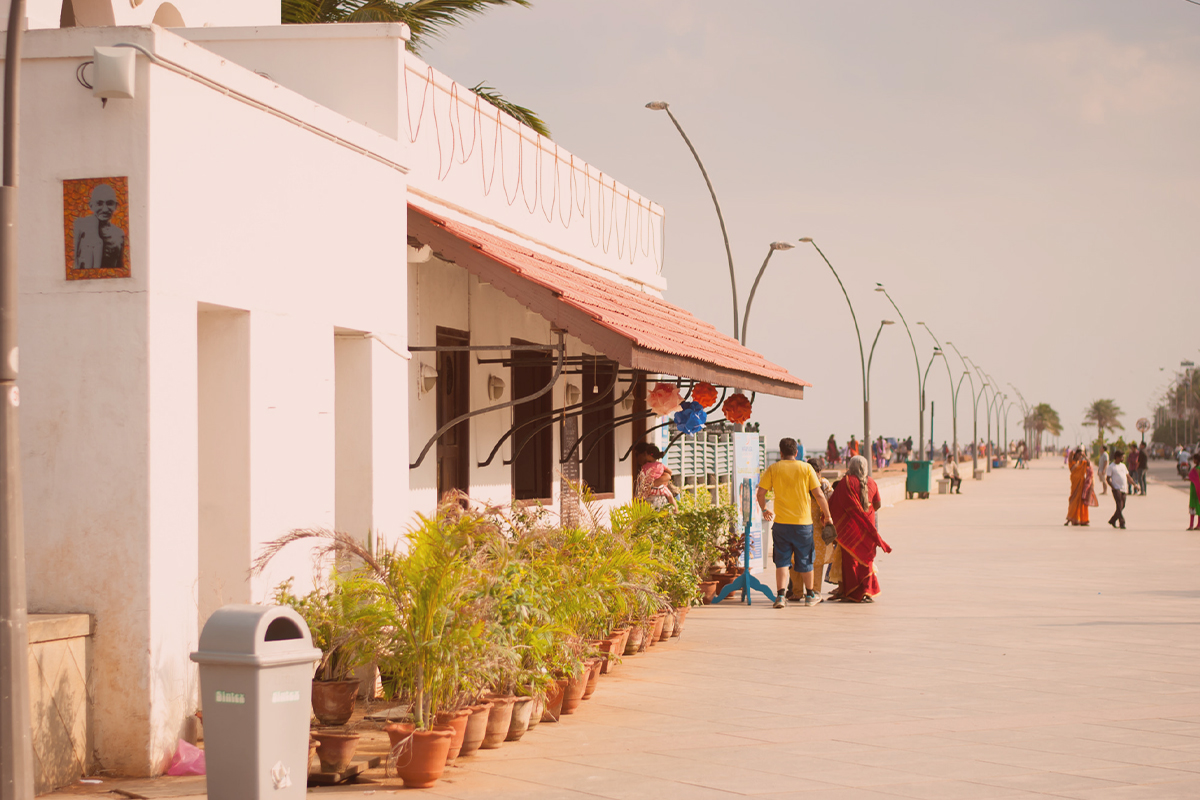
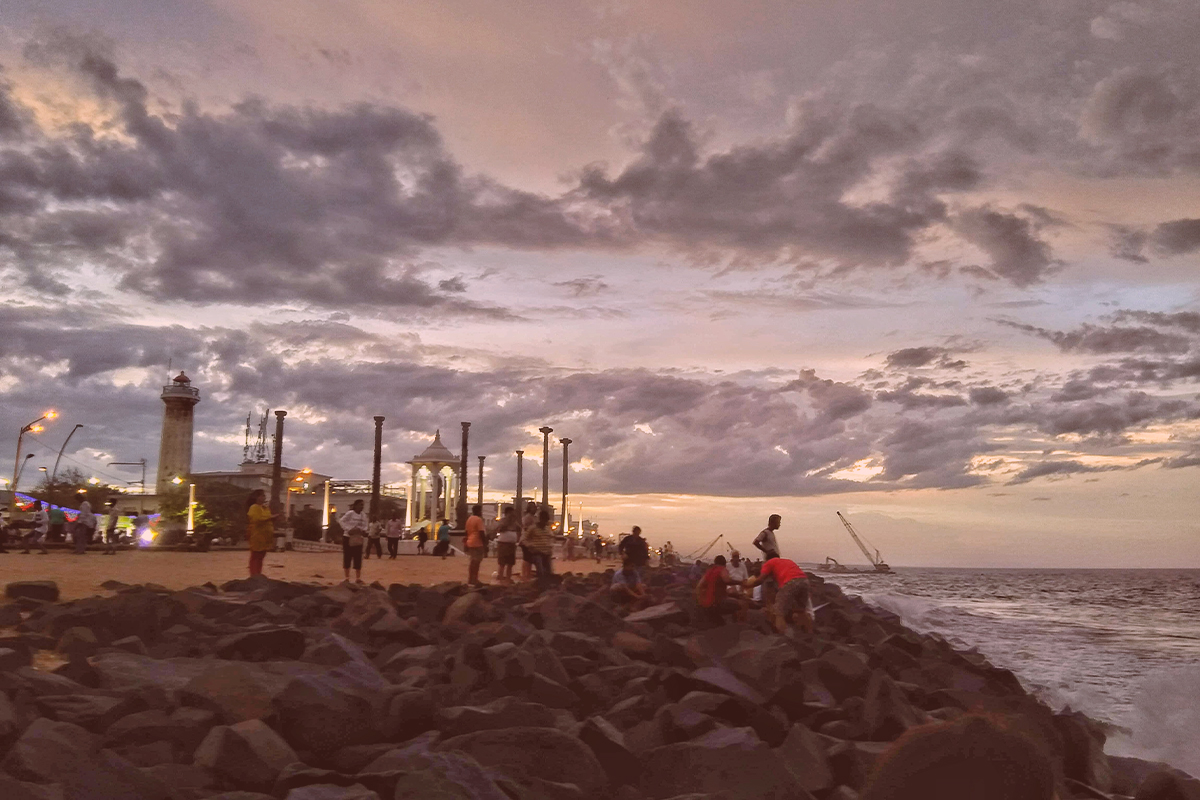
Grab a coffee, sit on a bench early in the morning, and watch the city wake up. It’s also the perfect launchpad for exploring. Within a two-minute walk, you can reach the Raj Nivas, the Pondicherry Museum, or head east to the famous Seaside Promenade.
A Quick Tip for Photographers
If you want the best shot of Aayi Mandapam Pondicherry, don’t go at high noon. The white paint reflects the sun so harshly that it will blow out your photos. The golden hour—around 4:30 PM to 5:30 PM—is magic here. The light softens, the stone glows, and the shadows from the surrounding trees create beautiful patterns. It’s easily one of the most photogenic Must-Visit Places in Pondicherry.
Plan Your Visit
If you are looking up Aayi Mandapam Pondicherry on a map, it is dead center in Bharathi Park.
- What does it cost? Nothing. It’s completely free, making it one of the absolute Best Free Activities in the city.
- When to go? The park is open from 6:00 AM to 8:30 PM.ˆ
- Where to eat after? You are surrounded by the Best French Restaurants in town.
Of all the historical sites in town, Aayi Mandapam Pondicherry stands out. You aren’t just looking at French architecture; you are looking at the legacy of Aayi—a woman whose generosity outlasted empires.
ˆFor official park timings, you can check the Puducherry Tourism Board.