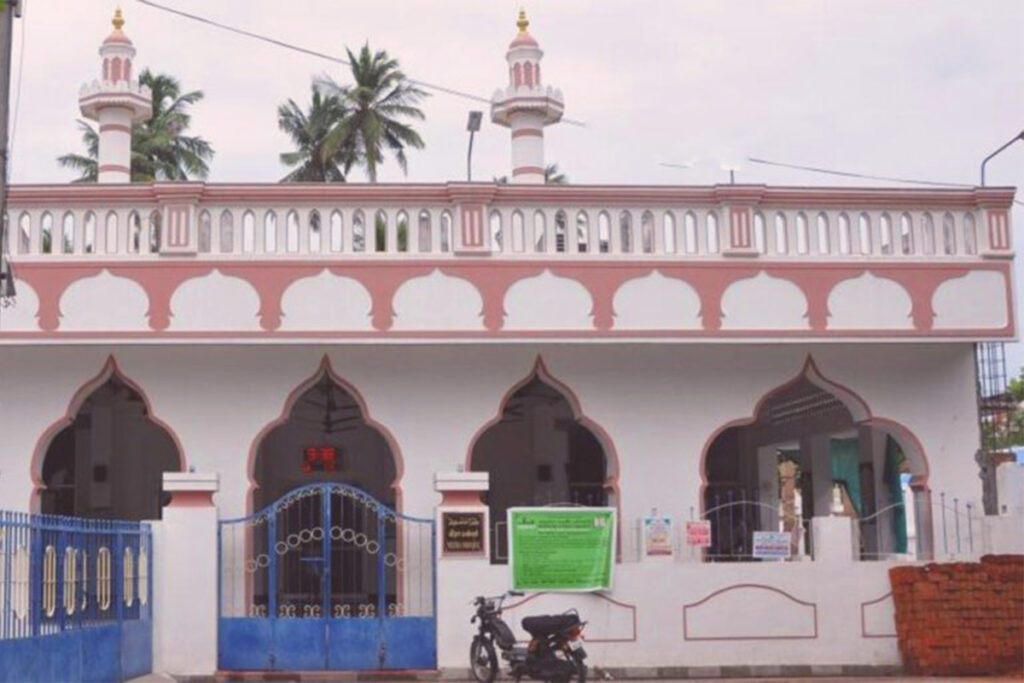
The historic Meeran Mosque in Pondicherry stands proudly as a brilliant testament to the deep spiritual and cultural diversity of this coastal city. If you truly want to explore the complex, layered history of the region beyond the famous French colonial narrative, a visit here is an absolute must. Also known affectionately by locals as Meerapalli, this sacred site is tucked away on a surprisingly quiet street just outside the main tourist grid.
It is widely celebrated as one of the absolute oldest and most highly respected Islamic places of worship in the entire Union Territory. Its peaceful aura, incredibly elegant architecture, and deep historical roots make it a living, breathing symbol of unity in diversity. It is a perfect, quiet reflection of exactly what this multicultural city stands for.
For many travelers who fall in love with the seamless blend of faiths here, this architectural marvel is a defining highlight. The Meeran Mosque Pondicherry offers an experience that inevitably makes visitors whisper, “I love Pondy.”
A Legacy Built by the Nawabs of Arcot
To truly appreciate the heavy historical weight of this structure, you must look back to the 17th century. Long before the French began building their mustard-yellow villas in the White Town Walking Guide area, the region was heavily influenced by powerful local dynasties.
The Meeran Mosque in Pondicherry was officially constructed by the Nawabs of Arcot. These incredibly wealthy and powerful rulers were highly celebrated for their passionate patronage of art, poetry, culture, and magnificent architecture across South India.

Today, this stunning structure holds the prestigious title of being the city’s second-oldest mosque. It continues to be an incredibly active, vital center of Islamic faith and heritage for the local community. Located right on the historic Yanam Vengadasala Pillai Street, it serves as a beautiful, living historical monument.
The streets surrounding the Meeran Mosque in Pondicherry buzz with a distinctly different, highly local energy compared to the tourist-heavy seaside areas. Walking through this neighborhood perfectly showcases the beautiful harmony of global influences that completely define the city’s multicultural identity.
Unique Architecture: Islamic and Gothic Fusion
What makes the Meeran Mosque Pondicherry truly fascinating to global historians and architects is its incredibly rare design. It features a highly unique, seamless fusion of traditional Islamic and European Gothic architectural styles.
This rare architectural blending attracts not only devout worshippers but also university researchers and photography enthusiasts from across the country. When you stand outside the heavy gates of the Meeran Mosque in Pondicherry, the first thing you will notice is the striking roofline.
A massive, graceful, and perfectly proportioned white dome rests securely on four incredibly strong, thick granite pillars. This setup is a classic, defining feature of traditional Indo-Islamic design. However, as your eyes move down to the main facade, the fusion becomes incredibly apparent.
The front of the building features beautifully curved, traditional Islamic arches mixed with intricate, sharp Gothic carvings. Rising high above the street is the stunning minaret. If you look closely at the very top of the minaret at the Meeran Mosque in Pondicherry, you will spot a notable bronze Kalasa.
This decorative bronze finial is actually a traditional Hindu/Dravidian architectural element. Placing it atop an Islamic minaret is a breathtaking, physical symbol of the region’s artistic and religious fusion. Additionally, safely housed within the peaceful mosque complex lies the revered tomb of its founder, Suubhi Errai Perrier Mullah.
Spiritual Experience and Cultural Harmony
The atmosphere immediately surrounding the Meeran Mosque in Pondicherry is deeply transformative. Beautiful, peaceful courtyards are surrounded by bright, whitewashed walls and incredibly quiet prayer halls.
Stepping into this area instantly creates a deep, profound sense of serenity that rivals the quietude found at the Sri Aurobindo Ashram Puducherry. It is important to note that the main, carpeted inner prayer area is strictly reserved for devout Muslim worshippers to perform their daily Salah.
However, respectful visitors of all faiths are warmly welcomed to admire the stunning exterior architecture of the Meeran Mosque in Pondicherry. You are encouraged to appreciate its heavy heritage and simply sit in the courtyard to experience its famously tranquil atmosphere.
The mosque plays an absolutely vital, central role in the daily life of the local Muslim community. This is especially true during massive, joyous global festivals like Eid-ul-Fitr and Eid-ul-Adha. During these incredibly special times, the entire Meeran Mosque in Pondicherry is beautifully decorated with bright lights and fresh flowers.
Generations of local families gather in the surrounding streets for massive communal prayers, joyous embraces, and grand celebrations. Witnessing this perfectly showcases the vibrant, enduring spirit of faith, charity, and absolute unity in the city.
Plan Your Visit and Etiquette
Because this is a highly active, revered place of daily worship, visiting requires a bit of planning and deep cultural respect.
- Location: You will find it on Yanam Vengadasala Pillai Street, located just a short auto-rickshaw ride away from the crashing waves of the Seaside Promenade Pondicherry.
- Best Time to Go: Try to plan your visit for the early mornings or the late evenings. This is ideal for experiencing the calmest environment. Additionally, the soft golden-hour sunlight hitting the brilliant white architecture makes for spectacular photography.
- Strict Dress Code: Modest, highly respectful clothing is absolutely required for all visitors. Both men and women must ensure their shoulders, chests, and knees are completely covered before approaching the gates.
- Visitor Etiquette: Non-Muslim visitors are always welcome to respectfully observe the outer architecture and enjoy the peaceful courtyard surroundings. However, you must absolutely avoid attempting to enter the main indoor prayer hall, especially during the designated daily prayer times.
The Meeran Mosque in Pondicherry isn’t just a static, dusty religious monument frozen in the 17th century. It is a vibrant, living testament to the city’s deeply inclusive heritage and shared history.
It offers every single visitor a profound, necessary moment of quiet reflection away from the busy tourist markets. The experience of visiting the Meeran Mosque in Pondicherry stays deeply lodged in your memory, feeling like a quiet, beautiful echo of devotion carried gently by the sea breeze.