Arikamedu: Exploring the Ancient Roman Trading Port Near Pondicherry
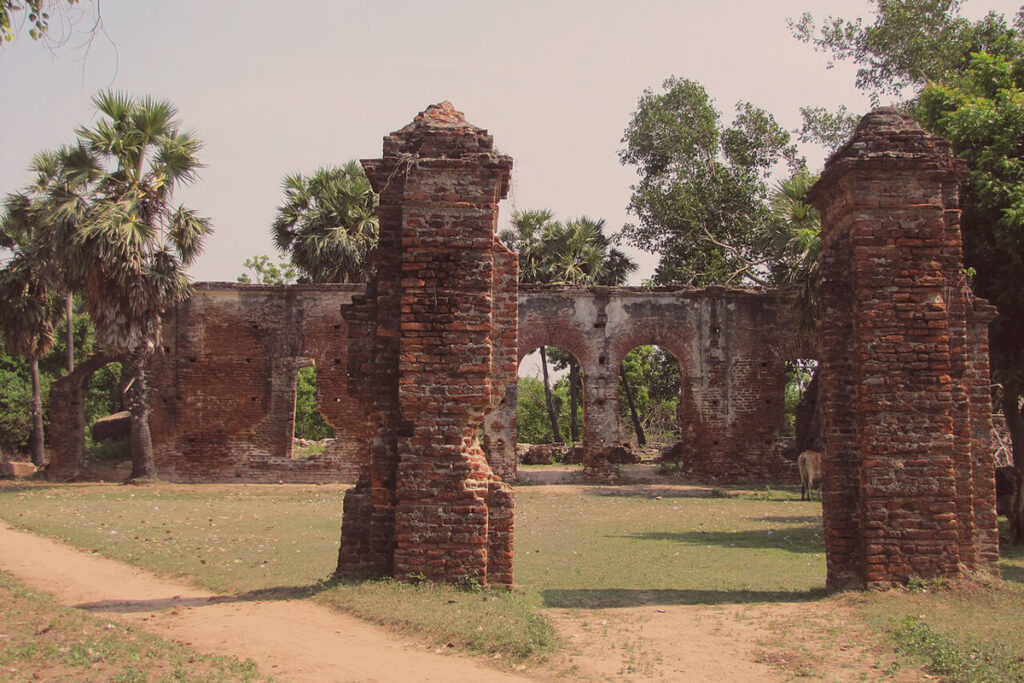
Arikamedu Pondicherry is the ultimate destination for history buffs who want to look far beyond the city’s 18th-century French colonial architecture. If you mention this site to a casual tourist walking down Goubert Avenue, they will likely have no idea what you are talking about. But hidden quietly on the lush, green banks of the Ariyankuppam River, just a few kilometers south of the city grid, lies an archaeological goldmine that completely rewrites the history of South India.
Long before the French, the British, or the Dutch ever sailed into the Bay of Bengal, this exact patch of riverbank was a massive, cosmopolitan trading hub. Known today by historians as the “Lost Roman City of India,” it was a place where local Tamil merchants, heavily armored Roman sailors, and global traders crossed paths over two thousand years ago.
Right now, as we enjoy the cool, breezy mid-February weather before the summer heat kicks in, it is the absolute perfect time to rent a scooter and explore the ruins. Let’s dive into the fascinating, forgotten world of the ancient spice route.
The Global Connection: When Rome Came to South India
To understand the sheer magnitude of Arikamedu Pondicherry, you have to travel back to the 2nd century BCE.
During this era, the mighty Roman Empire was incredibly wealthy and absolutely obsessed with luxury goods from the East. Roman navigators figured out how to ride the massive seasonal monsoon winds across the Arabian Sea and the Indian Ocean. Their massive wooden ships bypassed the dangerous land routes and sailed directly into the mouth of the Ariyankuppam River.
What were they looking for? The local Tamil merchants at Arikamedu Pondicherry had exactly what the Roman elite desired: incredibly fine muslin cloth, exotic spices (like black pepper, which the Romans called “black gold”), and expertly crafted semi-precious stones.
In exchange, the Roman ships unloaded massive quantities of gold and silver coins, fine tableware, and thousands of gallons of Mediterranean wine and olive oil. It was a thriving, bustling international port city that flourished for nearly a thousand years, right up until the 8th century CE.
The Glass Bead Capital of the Ancient World
While the Roman connection gets all the headlines, there is another fascinating reason why the ancient port of Arikamedu Pondicherry was world-famous. It was one of the largest and most sophisticated Indo-Pacific bead-making centers in the ancient world.
The local artisans here were masters of fire and glass. They imported raw glass and semi-precious stones (like agate, amethyst, and carnelian) and crafted them into incredibly tiny, beautifully colored beads. These “Arikamedu beads” were so highly valued that archaeologists have found them in excavation sites as far away as Southeast Asia, China, and even the eastern coast of Africa.
The Wheeler Excavations: Uncovering the Truth
For centuries, the port was abandoned, swallowed by the jungle and the river mud. The local Tamil people called the area Arikanmedu, which roughly translates to “eroded mound.”
It wasn’t until the 1940s that the world realized what was actually buried there. The famous British archaeologist Sir Mortimer Wheeler led a massive excavation of the site. When his team started digging into the eroded mounds of Arikamedu Pondicherry, what they pulled out of the dirt shocked the global historical community.
They didn’t just find Indian artifacts. They unearthed thousands of fragments of Roman amphorae (the distinct, two-handled terracotta jars used to transport wine and olive oil from Italy). They found Arretine ware, a very specific type of fine, red-glazed Roman table pottery stamped with the names of the potters back in Italy. They also found Roman lamps, glassware, and imperial coins. It was the definitive, undeniable proof of a massive Indo-Roman trade network.
What You Will See at the Site Today
I always like to manage expectations when telling travelers to visit Arikamedu Pondicherry. If you show up expecting to see towering, intact Roman columns like the Colosseum, you are going to be disappointed. This is a raw archaeological site, not a reconstructed theme park.
When you walk the grounds of Arikamedu Pondicherry today, you are walking through dense coconut groves and mango trees. The atmosphere is incredibly quiet, eerie, and untouched by heavy commercial tourism.
- The Ancient Brick Foundations: As you walk the dirt paths, you will see the scattered, excavated remains of ancient brick walls sitting in deep trenches. These are the actual foundations of the 2,000-year-old warehouses, dyeing vats, and trading posts where the Roman goods were stored.
- The French Jesuit Mission House: The most prominent, towering structure you will see isn’t Roman at all. It is the towering, ruined brick arches of an 18th-century French Jesuit Mission House. The French priests built a seminary right on top of the ancient mounds centuries later. The seminary was eventually abandoned, and the massive, ruined brick arches overgrown with banyan tree roots look like something straight out of an Indiana Jones movie.
- The River Views: The site sits right on the edge of the Ariyankuppam River. Watching the local fishermen cast their nets in the exact same waters where Roman galleons used to drop anchor is a deeply surreal experience.
The Crucial Next Step: The Pondicherry Museum
Because Arikamedu Pondicherry is an active, open-air site maintained by the Archaeological Survey of India (ASI), they do not keep the fragile, priceless artifacts out in the jungle.
To get the full experience, you must combine your trip here with a visit to the Pondicherry Museum located back in the center of the White Town Walking Guide. The museum dedicates an entire floor to the Wheeler excavations. Seeing the actual Roman wine jars, the gold coins, and the incredibly tiny, colorful glass beads behind the glass cases suddenly brings the muddy brick foundations of the riverbank to life.
Plan Your Visit
Because it is heavily shaded by coconut palms, it is a great place to visit when you want to escape the midday sun.
- Location: Ariyankuppam village, about 7 kilometers south of the city center.
- How to Reach: Grab a scooter or hire an auto-rickshaw and drive south down the Cuddalore Road. You will eventually turn off the main highway and wind through a quiet, rural village to reach the gates. (If taking an auto, ask the driver to wait for you, as finding a return ride from the ruins can be difficult).
- Timings: Open daily from 9:00 AM to 5:00 PM.
- Entry Fee: Completely free of charge.
- Make it a Day Trip: Because you are already heading south, combine your trip to Arikamedu Pondicherry with a visit to the nearby Chunnambar Boat House to catch a ferry over to the pristine sands of Paradise Beach.
A visit to Arikamedu Pondicherry is a journey into absolute silence. It doesn’t have the manicured lawns of Bharathi Park or the heavy foot traffic of the Seaside Promenade, but it holds a far more powerful connection to the ancient world. Walk the dirt paths, look at the river, and imagine the sails of the Roman Empire catching the wind.
Recent Post

Tags