Bharathi Park: A Guide to the Peaceful Green Heart of White Town
If you are following our famous White Town Walking Guide, you are going to quickly realize two things. First, the French colonial architecture in Pondicherry is stunningly beautiful. Second, walking the sun-baked, cobblestone streets of South India will eventually drain your energy.
When the midday humidity hits, and you desperately need a place to sit, breathe, and escape the chaotic traffic of the surrounding streets, you don’t need to retreat to a hotel room. You just need to find your way to Bharathi Park.
Located right at the geographical and historical epicenter of the French Quarter, this sprawling green oasis (formerly known as Government Park) is the absolute heart of the city. Surrounded on all four sides by the most important heritage buildings in the Union Territory, it is where history, nature, and local daily life collide perfectly.
Let me take you on a walk through Bharathi Park and show you why it is so much more than just a patch of grass.
A Parade Ground Turned Peaceful Sanctuary
To understand the layout of Bharathi Park, you have to look at how the French built this town. In the 18th and 19th centuries, the European colonizers loved order, symmetry, and massive public squares.
Originally known as Place du Gouvernement, the massive area that now makes up the park was actually a wide, open parade ground for the French military. Soldiers would march, military bands would play in the bandstand, and the French elite would gather to celebrate national holidays like Bastille Day.
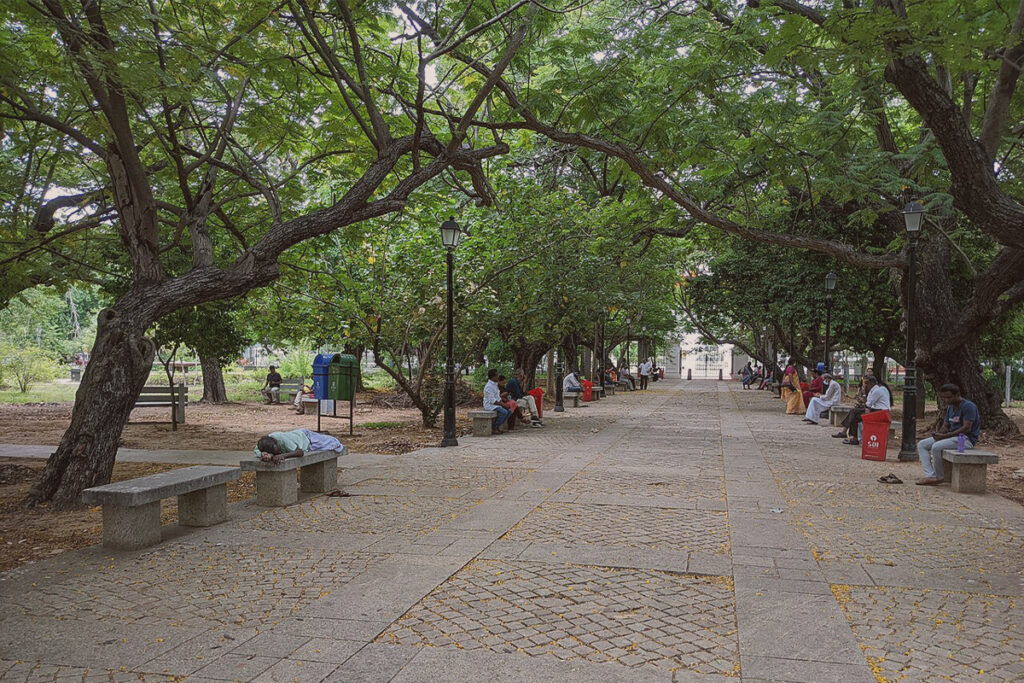
Today, it has been transformed into a deeply lush, heavily wooded sanctuary. But that old French grid system remains. Bharathi Park is perfectly divided into four massive quadrants by wide, intersecting granite walkways. And standing right at the dead center of those intersecting paths is the crown jewel of the city.
The Aayi Mandapam: A Monument to Kindness
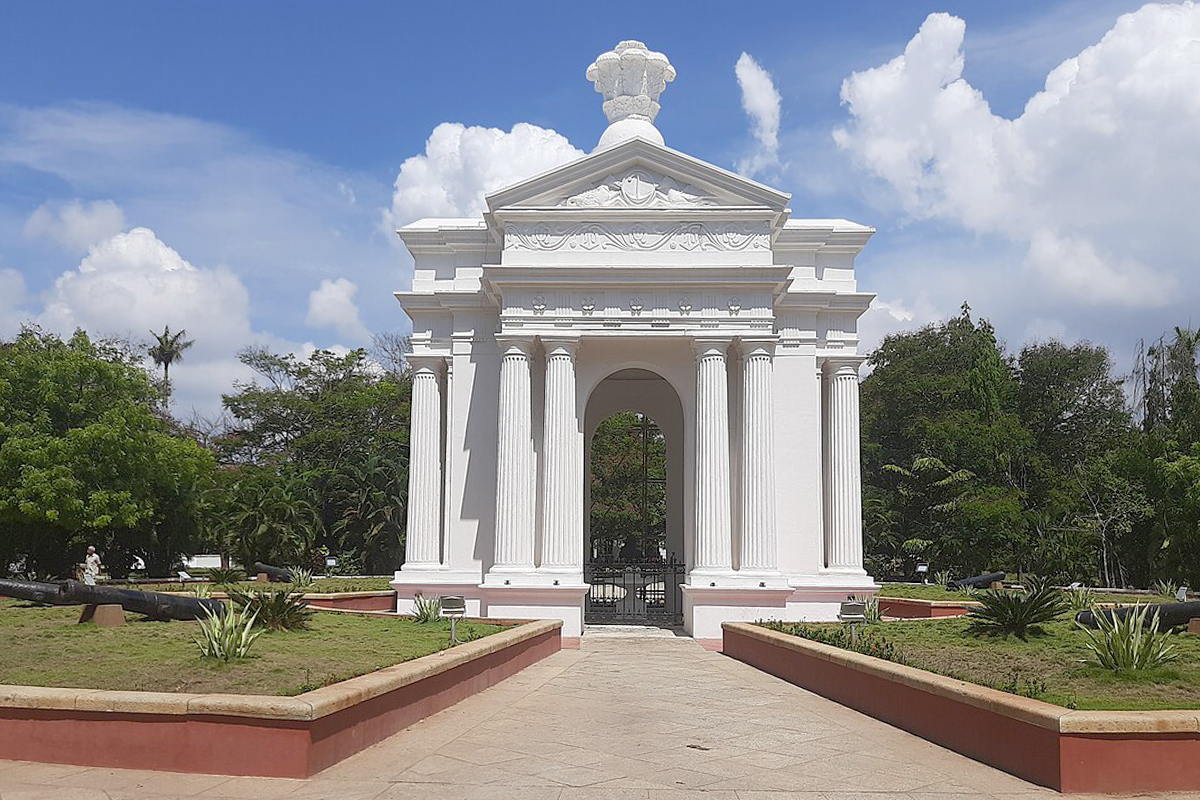
You cannot talk about Bharathi Park without talking about the blindingly white, Greco-Roman structure sitting directly in its center: the Aayi Mandapam.
Built in 1854 during the reign of the French Emperor Napoleon III, this brilliant white pavilion features massive fluted columns, elegant arches, and the French royal fleur-de-lis carved into its stone. But the most incredible part of this structure is its backstory. It wasn’t built for a king or a general.
It was built to honor a local Indian courtesan named Aayi, who centuries earlier had demolished her own palatial home to build a freshwater reservoir for the people. When a French engineer named Louis Guerre later used that same reservoir to pipe fresh drinking water directly into the center of Bharathi Park to save the thirsty colony, Napoleon III ordered this monument built in her honor.
It stands today as a brilliant piece of Indo-French history and is, without a doubt, the most photographed landmark in the entire park.
The Vibe: A Day in the Life of the Park
What makes Bharathi Park so special is how it changes its personality depending on the time of day you visit.
- The Quiet Mornings: If you get here at 6:30 AM, you will see the true local side of Pondicherry. The air is crisp with the sea breeze coming off the nearby ocean. You will see older gentlemen sitting on the granite benches reading Tamil and French newspapers, yoga groups stretching on the lawns, and joggers weaving through the ancient, towering mango and tamarind trees.
- The Shaded Afternoons: By 1:00 PM, when the sun is punishing, the thick green canopy of Bharathi Park acts as a natural air conditioner. You will find tourists seeking refuge on the shaded benches, students chatting near the fountains, and travelers mapping out their afternoon routes to the Best French Restaurants.
- The Vibrant Evenings: As the sun begins to set, the vintage cast-iron lampposts flicker on, casting a warm yellow glow across the walking paths. Families flood into the park. There is a large, dedicated play area on one side of the park with swings and slides where kids can run entirely safe from scooter traffic.
The Center of the Heritage Hub
One of the best reasons to visit Bharathi Park is that you don’t even have to leave the park to see the city’s greatest historical buildings. Simply stand in the center near the Aayi Mandapam and look in all four directions.
- To the North: You will see the brilliant yellow walls of the Raj Nivas, the 18th-century palace of the French Governor (now the residence of the Lieutenant Governor of Puducherry).
- To the East: Hidden just behind the trees is the Seaside Promenade, where you can hear the waves crashing against the rocks.
- To the South: You will spot the pristine, colonial-style Chamber of Commerce and the historic Hotel Qualithé.
- To the West: You’ll find the Pondicherry Museum, which houses the unbelievable 2,000-year-old Roman artifacts excavated from nearby Arikamedu.
Plan Your Visit
Because it is literally the center of the town’s grid, it is impossible to miss.
- Location: Bordered by Rue Saint Gilles, Romain Rolland Street, and Victor Simonel Street.
- Entry Fee: It is completely free, making it one of the absolute Best Free Activities for budget travelers and backpackers.
- Timings: The iron gates open at 6:00 AM and generally close around 8:30 PM.
- Pro-Tip: Grab an iced coffee or a fresh croissant from one of the bakeries on Rue Suffren, bring it into the park, and find a bench facing the Aayi Mandapam. It is the best cheap “cafe seating” in the entire city.
Whether you want to admire the Greco-Roman architecture, let your kids burn off some energy, or simply sit in the shade and listen to the birds, Bharathi Park is mandatory. It captures the absolute essence of Pondicherry—slow, green, historic, and incredibly peaceful.
Recent Post

Tags