Botanical Garden: A Peaceful Green Escape in the City

Right now, as we hit the middle of February, Pondicherry is in its absolute prime. The weather is perfect, the cafes in White Town are buzzing, and the city is getting ready for one of its most colorful annual events: The Farm Fest.
If you want to experience the absolute green heart of the city, you need to step away from the beaches and head straight to the Botanical Garden in Pondicherry.
Tucked away just off the chaotic, horn-honking bustle of South Boulevard (near the Old Bus Stand), this sprawling 22-acre sanctuary is a sudden, refreshing shock of deep green. It is one of the city’s most loved, yet often overlooked, natural attractions. It isn’t just a park where you can sit on a bench and eat a sandwich. With a staggering collection of over 1,500 species of rare plants, massive ancient trees that block out the sun, and beautifully manicured gravel paths, it is a living, breathing museum of biodiversity.
When visitors ask me for a quiet place to escape the midday heat, or if they have kids who need to burn off some energy, the Botanical Garden in Pondicherry is always my first recommendation. Let’s take a walk through two centuries of French botanical history.
The French Legacy: Spies, Seeds, and Science
To understand why this specific piece of land looks so different from the rest of the tropical South Indian landscape, you have to look back to 1826.
The French colonists originally established the Botanical Garden in Pondicherry not as a public park, but as a hardcore, experimental scientific hub. They wanted to test which valuable cash crops could survive the brutal Indian summers.
In 1831, the brilliant (and highly adventurous) French botanist C.S. Perrottet took absolute control of the grounds. Perrottet wasn’t just a gardener; he was essentially an agricultural spy. He spent decades traveling across the deepest jungles of India, Southeast Asia, and Africa, hunting for rare plant species. He would bring these exotic seeds back to Pondicherry to cultivate.
In fact, Perrottet is the man credited with successfully introducing highly lucrative crops like vanilla and mahogany to this entire region of India!
The Architecture of Nature
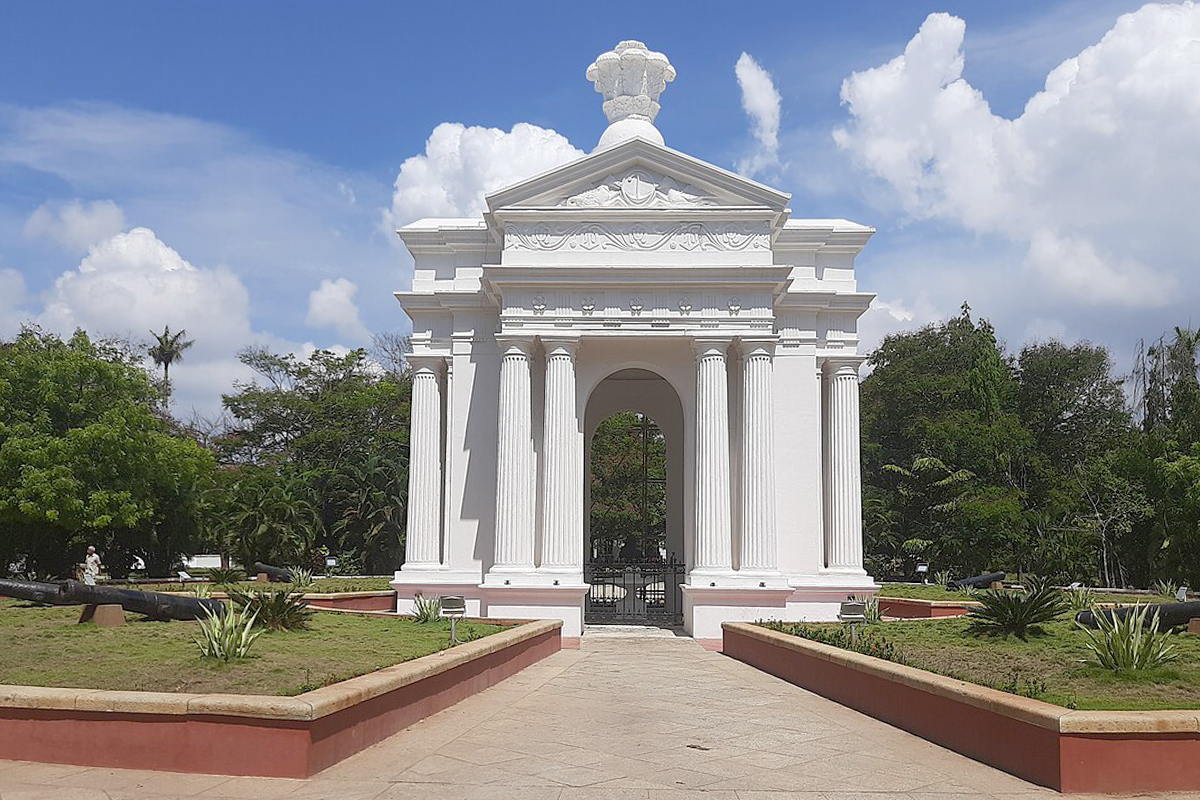
When you walk through the grand, ornate French-style entrance gates of the Botanical Garden in Pondicherry, you immediately see Perrottet’s vision. The layout is a fascinating clash of cultures. The underlying structure is strictly French formal style—think perfect symmetry, straight gravel pathways, and geometrically pruned hedges. But fighting against that European order is the wild, chaotic, and aggressive beauty of Indian tropical nature. The trees here are absolutely massive, their roots buckling the pavement and their canopies creating a permanent, cooling twilight.
The “Life of Pi” Connection
If you are walking through the dense bamboo thickets of the Botanical Garden in Pondicherry and suddenly feel a strange sense of déjà vu, you aren’t going crazy. You have probably seen this exact park in a Hollywood blockbuster.
If you have watched Ang Lee’s Oscar-winning masterpiece “Life of Pi,” you know the story begins with the protagonist’s father owning a beautiful, lush zoo in Pondicherry. The director didn’t use a soundstage in Los Angeles for those scenes; he filmed them right here.
While you won’t find Richard Parker the Bengal Tiger prowling behind any fences today, walking through the exact avenues and giant banyan trees featured in the movie is a surreal experience for film buffs.
What to See and Do Inside
The Botanical Garden in Pondicherry is massive, so it helps to have a game plan when you visit, especially if you are traveling with a family.
- Explore the 28 Themed Plots
The garden is scientifically divided into 28 distinct, themed sectors. As you wander, you will encounter rare tropical timber trees from South America, medicinal herbs native to the Himalayas, and incredibly vibrant ornamental flowers from Africa. Make sure to look out for the massive, petrified wood fossils displayed near the main entrance—they are millions of years old. - The Toy Train Ride
If you are traveling with children, this is non-negotiable. The Botanical Garden in Pondicherry operates a vintage-style mini toy train that chugs slowly along a dedicated track through the dense foliage. It is a fantastic, effortless way to see the vast grounds when your feet are tired from walking the White Town Walking Guide. (Note: A small separate fee applies for the train). - The Musical Fountain Show
If you visit on a weekend evening, the garden completely transforms. After the sun goes down, the central fountain becomes the stage for a synchronized Sound and Light show. Water jets dance and shoot into the air, perfectly timed to the rhythm of music and illuminated by brightly colored lasers. - The Annual Flower Festival (Farm Fest)
Because it is currently February, the Botanical Garden in Pondicherry is either gearing up for or currently hosting the annual “Farm Fest.” This is a massive event that draws horticulturists from all over India. The entire park is flooded with rare floral displays, insane vegetable carvings, and local gardening workshops. If you are in town right now, you cannot miss it.
Plan Your Visit
Located right on the edge of the city grid, it is very easy to find.
- Location: Near South Boulevard (Old Bus Stand). It is about a 10-minute auto-rickshaw ride from the Seaside Promenade or the Immaculate Conception Cathedral.
- Timings: The main gates of the Botanical Garden in Pondicherry are open daily from 10:00 AM to 5:00 PM.
- Entry Fee: The entry is incredibly cheap at just ₹20 per adult and ₹10 per child. (The toy train and the small indoor aquarium have separate, nominal entry fees.)
- Pro-Tip: While the main garden gates technically close to new foot traffic at 5:00 PM, the Musical Fountain show on weekends usually runs slightly later (often starting around 6:30 PM). Always check the specific show timings at the front ticket counter the moment you arrive so you can plan your afternoon accordingly!
If you are exhausted from dodging traffic and just want to sit under a 100-year-old mahogany tree with a good book, this is your spot. The Botanical Garden in Pondicherry is a living, breathing testament to the city’s unique history—where French science meets wild Indian beauty.
Recent Post


Tags