The Old Lighthouse Pondicherry: A Historic French Marvel
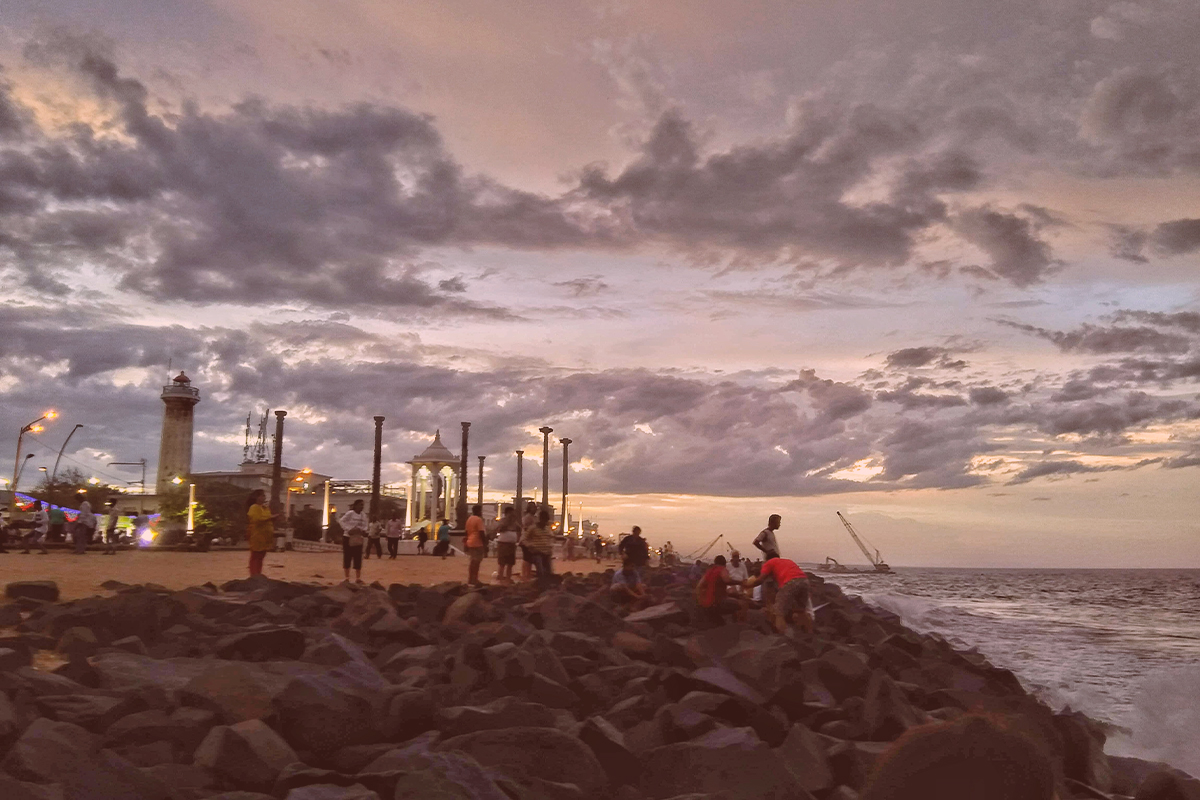
If you take a slow, aimless walk down the Seaside Promenade at sunset, you are going to be surrounded by the beautiful chaos of local life. You’ll pass the massive Mahatma Gandhi statue, dodge kids eating cotton candy, and hear the crashing of the Bay of Bengal against the black rocks. But as you walk further down Goubert Avenue, a very specific silhouette cuts into the evening sky.
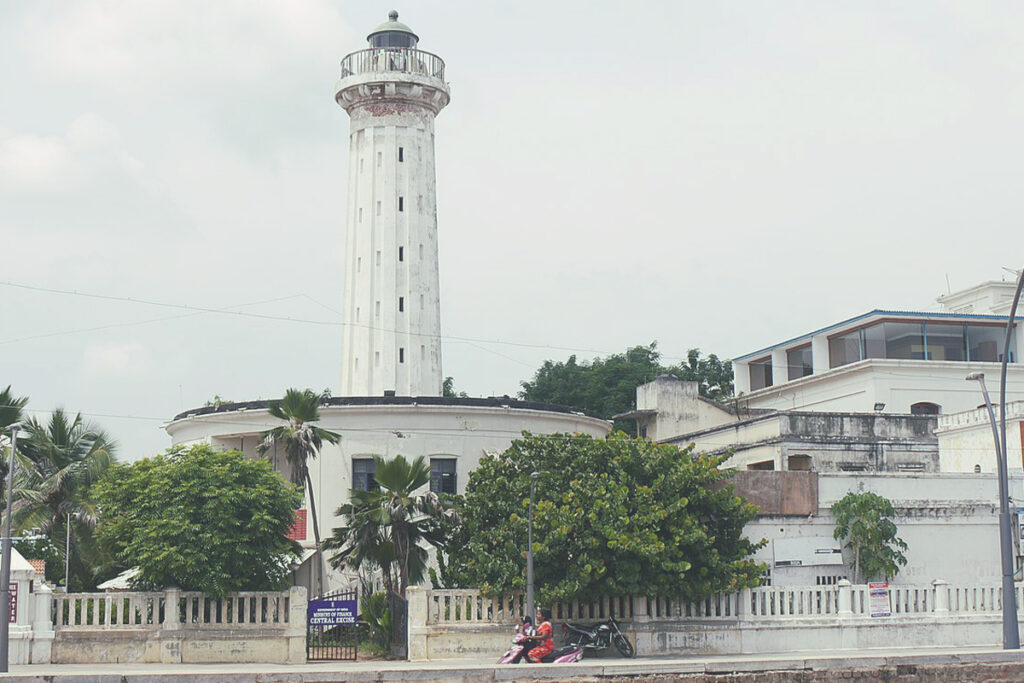
Standing quietly against the sea breeze, stripped of its original purpose but still commanding absolute respect, is the Old Lighthouse Pondicherry.
For over a century, this stone tower was the absolute lifeline of the French colonial empire in India. Before GPS, before radar, and before modern navigation, the beam from this exact spot was the only thing preventing massive merchant ships from shattering against the Coromandel Coast.
When visitors ask me for the best photo spots in the White Town Walking Guide, I always point them here. But the Old Lighthouse Pondicherry is so much more than a pretty backdrop for your vacation pictures. It is a masterpiece of 19th-century engineering. Let’s look at the incredible history behind the city’s silent guardian.
The Dark Coast: The Problem Before 1836
To really appreciate the sheer scale of what this building meant to the city, you have to imagine what the East Coast of India looked like in the early 1800s.
Pondicherry was a booming, wealthy French trading port. Massive wooden galleons were constantly arriving from Europe, loaded with goods and seeking spices and textiles. But navigating the Bay of Bengal at night was a total nightmare. The coastline here is notoriously flat and heavily shrouded in sea mist.
Before the Old Lighthouse Pondicherry was built, the local administration used a highly primitive, desperate method to guide ships. They would light a massive bonfire on top of the Red Hills (Gorimedu), which is located several kilometers inland. Naturally, a smoky fire miles away from the water was completely inadequate for sailors caught in a monsoon storm. Ship captains and merchants actively petitioned the French government for a modern solution.
Engineering a Marvel in the Sand
In 1835, Governor Saint Simon finally commissioned a proper maritime beacon. He handed the project to a brilliant French engineer named Louis Guerre (often credited in historical texts simply as L. Guerre), a man responsible for much of the city’s early colonial infrastructure.
Building a massive, heavy stone tower right on a sandy, shifting beach is an engineering nightmare. To solve this, Guerre ordered his teams to dig massive masonry wells nine meters deep into the sand, creating an incredibly stable, unshakeable foundation.
Upon this foundation, he built a highly unique structure. Instead of a standard straight cylinder, the Old Lighthouse Pondicherry features a robust, square rectangular base. Rising elegantly out of that base is a 29-meter (approx. 95 feet) tall cylindrical, fluted tower featuring a double-gallery design. It was completely revolutionary for the region. When it was officially inaugurated on September 1, 1836, it was celebrated as the very first modern lighthouse on the entire East Coast of India.
The Evolution of the Light
A lighthouse is only as good as its beam, and the technology inside the Old Lighthouse Pondicherry evolved right alongside the modern world.
When the doors first opened in 1836, electricity didn’t exist here. The lantern room at the very top housed 12 massive, heavy-duty oil lamps. The light from these burning wicks was captured and magnified by a series of highly polished lenses and reflectors, projecting a beam that could be seen by sailors 15 miles out at sea.
As the 20th century arrived, the tower was upgraded. In 1913, the smoky oil lamps were finally ripped out and replaced by a rotating, battery-powered electrical beam. In 1931, as maritime traffic increased, a staggering 1,000-watt rotating beam was installed. It took exactly 36 seconds for the beam to make one full rotation, sweeping across the dark ocean and reaching ships up to 26 nautical miles away.
Retirement and a New Life
For 143 years, the Old Lighthouse Pondicherry did not blink. It survived brutal cyclones, the transition of power from the French to the Indian government, and the modernization of the world.
But eventually, the city outgrew it. As the trees surrounding Bharathi Park grew taller and the need for a fully automated, higher-reaching system became urgent, the government made a tough decision. In 1979, the historic light was permanently switched off. A new, much taller concrete lighthouse was constructed further down the coast in Kirapalaiyam village to take over the watch.
Usually, when old industrial buildings are decommissioned, they are torn down. But the city refused to let its guardian fall.
The Old Lighthouse Pondicherry was lovingly preserved. Today, its thick stone walls and empty lantern room serve as a cherished heritage monument. The interior base has occasionally been used as a cultural hub, hosting art exhibitions, small maritime history displays, and local music events that breathe life back into the 19th-century masonry.
Plan Your Visit
Because it is located right on the main tourist strip, missing the Old Lighthouse Pondicherry is almost impossible.
- Location: Beach Road (Goubert Avenue), located directly opposite the Gandhi Statue and right next to the French War Memorial.
- Timings: While you can view the exterior 24/7, the interior museum space (when open) generally operates from 3:00 PM to 7:00 PM.
- The Best Time to Go: If you want that perfect, postcard-worthy photograph, arrive during the golden hour between 4:30 PM and 5:30 PM. The setting sun hits the pale stone of the tower perfectly, creating a beautiful contrast against the darkening blue sky.
Whether you are a maritime history nerd, a photographer chasing the perfect light, or just someone looking for a quiet moment by the sea, you have to stop and look up at this tower. The Old Lighthouse Pondicherry is a beautiful, silent reminder of the days when the city was the undisputed Queen of the Coromandel Coast.
Recent Post

Tags